Best Fish for a 20 Gallon Tank (2026): 20 Picks + Stocking Ideas
Posted by on 05/07/2025
Updated October 19, 2026
If you own a 20-gallon tank, you have plenty of stocking options to choose from. The water alone in a 20-gallon tank weighs about 167 lbs, so plan your stand and your layout before you buy fish.
If you're deciding what to choose for your 20-gallon aquarium, we're going to recommend 20 excellent stocking options, so that you can build a well-rounded tank.
Quick answer: what are the best fish for a 20 gallon tank?
The best fish for a 20 gallon tank stay under about 3 inches: schooling fish like neon, ember and emperor tetras or green kubotai rasboras, livebearers like guppies, a pair of dwarf cichlids such as German blue rams or Apistogramma, and one small pleco like the Queen Arabesque.
A simple, proven stock for a 20 long: 12 ember tetras, 8 spotted blue eye rainbowfish, a pair of Apistogramma cacatuoides and a few nerite snails.
🛒 Shop freshwater fish on Light Fish
From hobbyist breeders and small sellers across the US.



At a Glance: All 20 Fish
Sizes are typical adult lengths. "How many" is the minimum group for schooling fish, and the most a 20 gallon comfortably holds for territorial ones.
| Fish | Adult size (in) | How many | Temperament | Care | Temp (°F) |
|---|---|---|---|---|---|
| Blue Moscow Guppy | 1.5–2 | 6+ (more females than males) | Peaceful | Easy | 72–82 |
| German Blue Ram | 2–3 | 1 pair | Territorial | Moderate | 80–86 |
| Balloon Ram | 2–2.5 | 1 pair | Territorial | Moderate | 78–85 |
| Queen Arabesque Pleco (L260) | 3–3.5 | 1 | Peaceful | Moderate | 77–84 |
| Green Phantom Pleco (L200) | 5–7 | 1 | Peaceful | Moderate | 77–84 |
| Green Kubotai Rasbora | 0.75 | 10+ | Peaceful | Easy | 72–79 |
| Blue Emperor Tetra | 1.5–2 | 6+ | Peaceful | Easy | 75–81 |
| Apistogramma cacatuoides | 2–3.5 | 1 pair or 1 male + 2 females | Territorial | Moderate | 75–84 |
| Platinum Blue Medaka Ricefish | 1.5 | 6+ | Peaceful | Easy | 65–80 |
| Neon Tetra | 1.5 | 8+ | Peaceful | Easy | 72–78 |
| Green Neon Tetra | 1 | 10+ | Peaceful | Moderate | 75–82 |
| Spotted Blue Eye Rainbowfish | 1.2–1.5 | 8+ | Peaceful | Moderate | 75–82 |
| Rocket Clown Killifish | 1.5 | 6+ | Peaceful | Moderate | 72–79 |
| Kribensis Cichlid | 3–4 | 1 pair | Territorial | Easy | 75–80 |
| Apistogramma agassizii | 2–3 | 1 male, or 1 pair | Territorial | Moderate | 78–84 |
| Golden Dwarf Cichlid | 2–3 | 1 pair | Mostly peaceful | Easy | 72–79 |
| Ember Tetra | 0.8 | 10+ | Peaceful | Easy | 73–82 |
| Bluefin Notho | 2 | 1 male (with females) | Males fight | Moderate | 72–79 |
| Dario hysginon | 0.8–1 | 6+ (more females) | Peaceful | Moderate | 72–79 |
| Emperor Tetra | 2 | 6+ | Peaceful | Easy | 73–81 |
20 Best Fish for a 20 Gallon Tank
Hobbyists upgrading from a 10-gallon aquarium will have many additional stocking options in a 20-gallon setup. Plecos, Rams, and Dwarf Cichlids are just a few of many new species you can explore in a 20-gallon tank.
Best of all, 20-gallon tanks are easier to maintain than their nano-sized counterparts. Due to the tank's larger size, water chemistry changes are less sudden, and hobbyists will have more wiggle room to address water chemistry issues before they evolve into a bigger problem.
Here are 20 fish to help get you started.
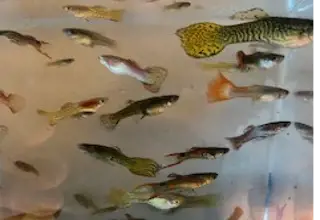
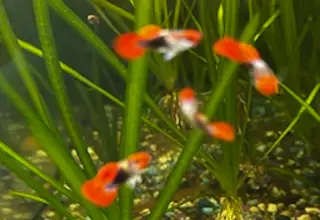
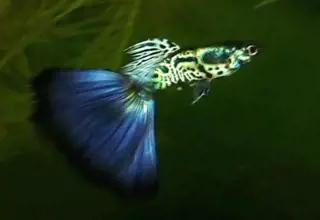
Blue Moscow Guppies
Size 1.5–2 in · Groups of 6+, more females than males · 72–82°F · Peaceful · Easy
Moscow guppies are sought after for their striking color. These unique fish have been linebred from Moscow-based breeders for decades, with Blue, Green, and the rare Purple coloration being some of the most sought after. They are easy to care for, and will stand out in any aquarium.
👉 Shop Fancy Guppies on Light Fish

German Blue Ram
Size 2–3 in · One pair · 80–86°F · Territorial · Moderate (needs warm, stable, soft water)
The minimum tank size for these fish is 20 gallons, making them a unique option for hobbyists looking to stock their 20-gallon tanks. German Blue Rams are cichlids, and they display similar aggressive behavior.
Hobbyists will appreciate the bold personalities of these fish, but they may want to consider other species if their 20-gallon tanks are already stocked with peaceful community fish, otherwise, you'll be asking for a territorial dispute.

Balloon Ram
Size 2–2.5 in · One pair · 78–85°F · Territorial · Moderate
Balloon Rams are a controversial fish. Their balloon-like appearance is a result of hybridization - breeders continuously crossbreed the fish to develop more pronounced features. While some consider their appearance to be quite unusual, others place a lot of value on their unique appearance. We'll leave it up to you to decide whether or not the Balloon Ram is the right fish for you.

Queen Arabesque Pleco
Size 3–3.5 in · Keep one · 77–84°F · Peaceful · Moderate
Plecos are a joy to own, and without a doubt one of the most beautiful is the Queen Arabesque. Hobbyists will appreciate the fish's small size and zebra-like colors, but those looking to acquire the fish will need to have a tank with plenty of available driftwood. Similar to other plecos, the Queen Arabesque will rasp on available wood in the tank - an essential part of their overall diet.

Green Phantom Pleco
Size 5–7 in depending on the species · Keep one · 77–84°F · Peaceful · Moderate
The Green Phantom is a stunning pleco, with a lemon-lime colored body, adorned with small, yellow dots. Just like other plecos, the Green Phantom will require plenty of driftwood to rasp on.
Hobbyists should be aware that there are two Green Phantom Plecos, both share the same L classification number, L-200 Hemiancistrus subviridis and L-200 Baryancistrus demantoides. We cover the differences in more detail in our care guide, Green Phantom Pleco: Care, Size, Appearance & More.
Size matters here: Hemiancistrus subviridis stays around 5 inches, but Baryancistrus demantoides can reach 6 to 7 inches, which is the upper limit for a 20-gallon. Keep only one, choose a 20 long over a 20 high, and plan on a 29-gallon or larger if yours turns out to be the bigger species.

Green Kubotai Rasboras
Size 0.75 in · Groups of 10+ · 72–79°F · Peaceful · Easy
20 gallons is plenty of space for a group of Green Kubotai Rasboras, and hobbyists should have no problem keeping up to 20 of them in a tank this size.
Seeing a large group of these fish move above a dark-colored substrate, or in front of a large group of red background plants is a sight to behold!

Blue Emperor Tetra
Size 1.5–2 in · Groups of 6+ · 75–81°F · Peaceful · Easy
We're big fans of the Blue Emperor Tetra. While these fish can be quite hard to acquire, hobbyists will appreciate the fish's blue coloration and active personality. In a 20-gallon tank, aquarists should have no issues keeping up to 15 of them at once.

Apistogramma Cacatuoides
Size 2–3.5 in (males larger) · One pair, or one male with two females · 75–84°F · Territorial · Moderate
If you own a 20-gallon tank, you'll be able to care for dwarf cichlids. One of the most common is the Cockatoo Dwarf Cichlid (Apistogramma cacatuoides). Male apistos are known for their brightly colored fins, which display a vibrant orange and black coloration.

Platinum Blue Medaka Ricefish
Size 1.5 in · Groups of 6+ · 65–80°F · Peaceful · Easy
While white-colored ricefish tend to be a bit more common, the rare Platinum Blue color variant makes an excellent choice for a 20-gallon tank. Due to their small size, hobbyists can keep up to 12 of these fish in a 20-gallon tank.
Ricefish are also capable of living in cold-water conditions, a unique feature that allows the hobbyist to experiment with different types of aquascapes.

Neon Tetra
Size 1.5 in · Groups of 8+ · 72–78°F · Peaceful · Easy
The Neon Tetra is an aquarium staple. Native to the Amazon, these fish are always in high demand. Their bright blue bodies and red stripe that extends into the fish's tail fin make them an attractive option for hobbyists looking to add a pop of color to their tanks.
Hobbyists can stock 15 of these fish in their 20-gallon tanks.

Green Neon Tetra
Size 1 in · Groups of 10+ · 75–82°F · Peaceful · Moderate
Slightly smaller than the Neon Tetra is the Green Neon Tetra. We tend to think the fish has a stronger blue coloration than it does green, but we'll leave it up to you to decide.
Due to the fish's small size, hobbyists can keep up to 20 of them in a 20-gallon tank, just be sure to stay on top of your regular maintenance routine to keep your aquarium water in tip-top shape.

Spotted Blue Eye Rainbowfish
Size 1.2–1.5 in · Groups of 8+ · 75–82°F · Peaceful · Moderate
Hailing from Papua New Guinea and first described in 1911, the Spotted Blue Eye is a beautiful fish that only reaches about an inch in length, making it a great choice for a 20-gallon.
Hobbyists can keep a small shoal of about 8-10 of these fish in their 20-gallon tanks.

Rocket Clown Killifish
Size 1.5 in · Groups of 6+ · 72–79°F · Peaceful · Moderate · Needs a tight lid
Often difficult to acquire, the Rocket Clown Killifish is a brightly-colored fish known for its rocket-like tail. These fish tend to hang near the water's surface, hunting for their next food source that they can consume with their upturned mouths.
Hobbyists can keep up to 15 of them in a 20-gallon tank, however, you'll need a tight-fitting lid, as these fish are known to jump out of their tanks.

Kribensis Cichlid
Size 3–4 in · One pair · 75–80°F · Territorial, especially when breeding · Easy
These omnivorous cichlids are a favorite among hobbyists for a reason. Their hardiness makes them an excellent choice for hobbyists new to cichlid-keeping.
With a life expectancy of about 5 years, hobbyists can keep 2 of them in a 20-gallon tank. Be aware, that these fish tend to be a bit on the aggressive side, but not nearly as aggressive as other cichlids, such as the Electric Blue Jack Dempsey, or Cuban Cichlid.
👉 Shop Kribensis and other African Cichlids on Light Fish

Apistogramma Agassizii
Size 2–3 in · One male, or one pair · 78–84°F · Territorial · Moderate
Native to the Amazon, Apistogramma agassizii is a small, territorial fish that uses its brightly colored fins for courting females. The species is quite resilient, and many hobbyists have cross-bred the fish to produce a variety of different color strains, such as the Agassizi Fire Red.
Hobbyists can keep a single Apisto Agassizii in a 20-gallon tank.

Golden Dwarf Cichlid
Size 2–3 in (females smaller) · One pair · 72–79°F · Mostly peaceful · Easy
Next up on our list is the Golden Dwarf Cichlid. Known as one of the most peaceful dwarf cichlids on our list, hobbyists can keep a pair of these fish in their 20-gallon tanks.
These fish breed quite regularly in captivity, so hobbyists looking to get their hands on a male/female pair should have little issues when it comes to spawning. However, some may view their propensity to breed as a detriment in keeping the species.

Ember Tetra
Size 0.8 in · Groups of 10+ · 73–82°F · Peaceful · Easy
Ember Tetras are some of the smallest fish on our list, but their small size might be their biggest advantage in a 20-gallon tank. Hobbyists can keep up to 25 of them in a 20-gallon. With this amount of fish, you should see them school regularly, a feature highly sought after by hobbyists and professional aquascapers.

Bluefin Notho
Size 2 in · One male with a few females · 72–79°F · Males fight each other · Moderate · Lives about a year
Bluefin Notho, similar to the Rocket Clown, is a freshwater killifish known for its vibrant coloration. Unfortunately, males are the ones seen displaying the bright orange coloration pursued by hobbyists, and they tend to be quite aggressive.
We recommend only keeping one of them in a 20-gallon tank, but for hobbyists with a backup tank, you may be able to keep 2 males in a 20-gallon. If you choose to do so, you'll want to regularly monitor them for signs of aggressive behavior. Similar to the Rocket Clown, a tight-fitting lid is a must for the species.

Dario hysginon
Size 0.8–1 in · Groups of 6+, more females than males · 72–79°F · Peaceful · Moderate
We've seen plenty of gorgeous aquatic species from Myanmar, such as the Celestial Pearl Danio and Sulawesi shrimp. Another fish is the Dario hysginon, a small-sized red aquatic fish that makes an excellent 20-gallon addition.
These fish are incredibly rare. Breeders looking to get their hands on a male/female pair will be happy to know that the fish can breed in captivity, although raising the fry can be quite difficult.

Emperor Tetra
Size 2 in · Groups of 6+ · 73–81°F · Peaceful · Easy
Emperor Tetras are bold, active fish that have a lot of personality. These fish are much larger than the previously mentioned Green Neons and Embers, and adults can reach about 2 inches in length.
These fish are known to constantly swim around the water column, always on the hunt for their next food source. Hobbyists will appreciate their dark purple coloration and should have no issues keeping up to 8 of them in a 20-gallon tank.

How Many Fish Can Go in a 20 Gallon Tank?
There's no exact number, and the old "one inch of fish per gallon" rule falls apart quickly: twenty 1-inch ember tetras and one 20-inch fish are very different tanks. Plan around a few practical limits instead.
- Adult size, not store size. Look up how big each fish gets. Most good 20-gallon fish stay under 3 inches.
- Bioload. Active eaters like guppies and cichlids produce more waste than tiny tetras and rasboras. A typical 20-gallon community holds roughly 15 to 25 small fish, fewer if you add cichlids or a pleco.
- Filtration and maintenance. A filter rated for 30 to 40 gallons and a 25% weekly water change give you more room for error.
- Footprint. A 20 long (about 30 by 12 by 12 inches) has more floor space and swimming length than a 20 high (about 24 by 12 by 16 inches). Choose the long for schools, cichlid territories and plecos.
- Territory. Keep one pair of territorial fish (rams, Apistogramma, kribensis), not several, and give them caves or wood to claim.
20 Gallon Stocking Ideas
Three combinations that work in a 20 long. Add fish a few at a time and let the filter catch up between additions.
1. Peaceful community
12 ember tetras, 8 spotted blue eye rainbowfish, 6 emperor tetras and 3 nerite snails. Small, calm fish that use different levels of the tank, with enough room for real schooling.
2. Livebearer tank
8 male fancy guppies (or endlers), 3 platies and a colony of cherry shrimp in a planted tank. All-male guppies give you color without a population explosion. Mix in females only if you have a plan for the fry, and expect the fish to eat some baby shrimp.
👉 Shop Fancy Guppies on Light Fish · Endlers · Platies · Shrimp · Plants
3. Dwarf cichlid tank
One pair of Apistogramma cacatuoides (or German blue rams), 12 green neon or ember tetras, and a Queen Arabesque pleco. The cichlids are the stars; the tetras act as "dither fish" that make them feel safe enough to come out and color up. Add caves and leaf litter so the pair can claim a corner.
FAQ
How many tetras can go in a 20 gallon tank?
For small tetras such as neon or ember tetras, a school of 10 to 15 fits comfortably in a 20 gallon tank, and up to about 20 to 25 embers if they are the only school in a well-filtered, planted 20 long. Larger tetras like emperor tetras do best as a group of 6 to 8. Never keep fewer than 6 of any schooling tetra.
How many guppies can live in a 20 gallon tank?
About 8 to 10 adult guppies. Keep males only if you don't want fry, or about one male to two or three females if you do, and plan for the babies, because guppies breed quickly.
What is the biggest fish for a 20 gallon tank?
Fish that stay around 3 to 4 inches work as centerpieces: a pair of kribensis, a pair of dwarf cichlids such as German blue rams or Apistogramma, or a single small pleco like the Queen Arabesque. Angelfish, oscars, common plecos and goldfish outgrow a 20 gallon.
Can goldfish live in a 20 gallon tank?
Not long term. Fancy goldfish grow to 6 to 8 inches and produce a lot of waste, so most keepers give a pair 30 gallons or more. Common and comet goldfish grow even larger and belong in ponds.
Is a 20 long or a 20 high tank better for fish?
For most fish, the 20 long (about 30 by 12 by 12 inches) is better. It has more floor space and swimming length for schools, territories for cichlids, and more surface area for oxygen exchange. A 20 high (about 24 by 12 by 16 inches) suits tall plants and calm, small fish.
Can angelfish live in a 20 gallon tank?
We don't recommend it. Angelfish grow about 6 inches long and up to 8 inches tall and need a tall tank of around 29 gallons or more, so they are left off this list.
Conclusion
That's our list of the 20 best fish for a 20-gallon tank. Whether you go with a school of tetras, a livebearer tank or a pair of dwarf cichlids, a 20 long gives you plenty of good options.
Which would you pick? Let us know in the comments. When you're ready to stock, see what's new on Light Fish: fish, shrimp and plants from hobbyist breeders across the US, shipped to your door with our live arrival guarantee.

Miles Harrison
With over a decade of aquarium experience, Miles can be found writing about saltwater and freshwater aquariums. When he’s not writing about fish, you can find him going for a run or building websites, such as this one!
October's Giveaways on Light Fish

